Comparing music journalists, Lester Bangs and Caitlin Moran
In 1752 Charles Avison wrote, “An Essay On Musical Expression,” which could be held as the first written attempt of a music critique. Since then, the world around us has evolved, and with it so has our technology, media, and music and with each advancement the journalists and styles of journalism have also changed. In this essay I will be focusing on the contributions of American rock critic Lester Bangs (1948-1982) and English Journalist and author Caitlin Moran (1975- present).
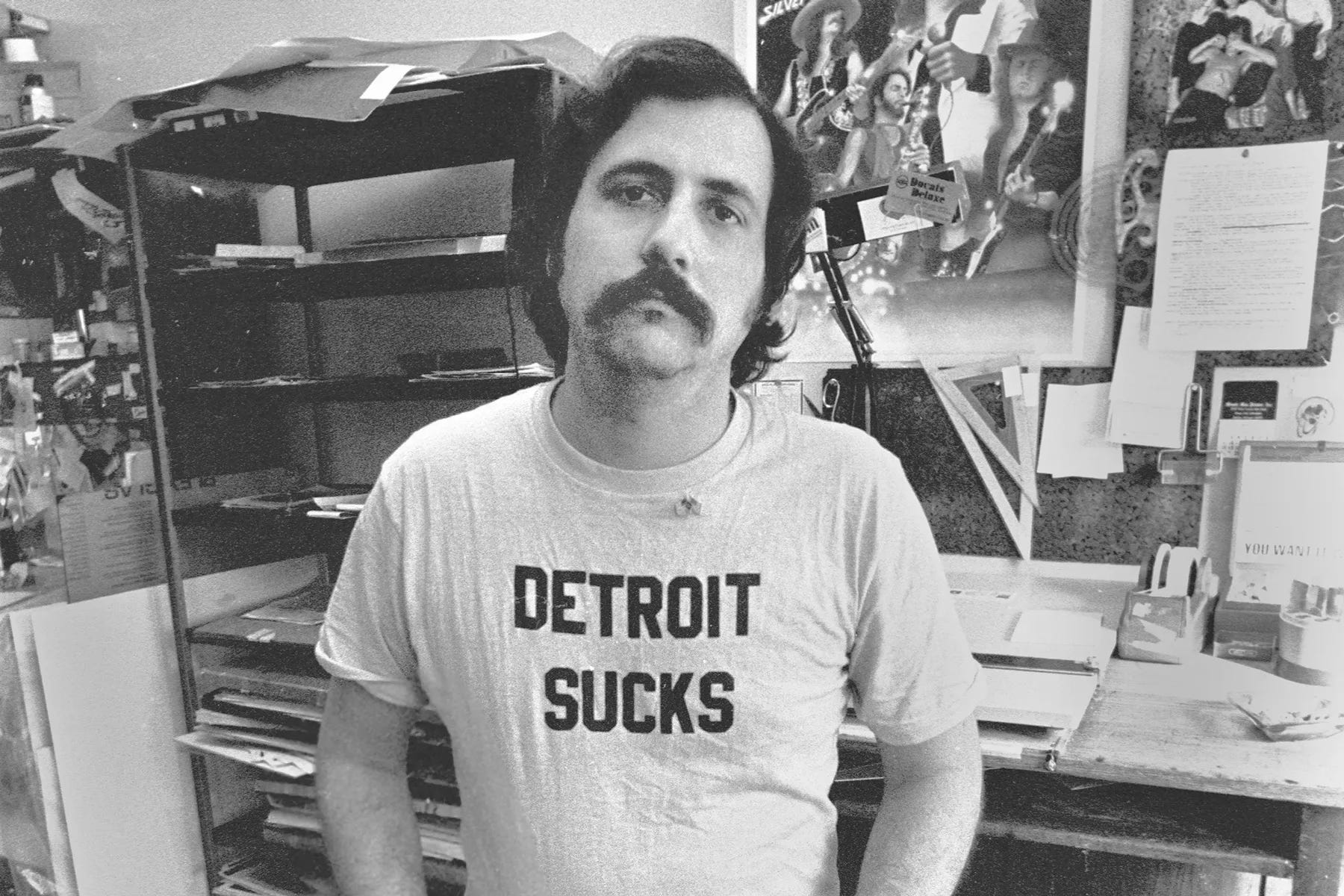
In his 2000 Book entitled “Let It Blurt”, author and music critic Jim DeRogatis hailed Bangs as “America’s greatest rock critic.” (Derogatis, 2013) But how does one become the greatest? It could be argued that upbringing and the environment that surrounds you affects who you become later on in life. When Picturing Lester Bangs, many think of his career as a prolific writer during the seventies and eighties. In his 2002 article for the Guardian newspaper, titled “Pills and Thrills,” Nick Kent characterizes Bangs as, “the fragile-hearted, drunken bozo word-magician who took rock criticism to a giddy height of vicarious readability.” (Kent, 2002) However, one can assume that without his chaotic upbringing he would have never become the icon we know today.
Born in 1948, in Escondido, California, Leslie Conway Bang’s family and upbringing was anything but conventional. His mother was a Jehovah’s witness, and his father was a truck driver, as well as an alcoholic. When Bangs was nine his father disappeared, and his mother told him that he had died in a fire. With a lack of parental figures and a predisposition to substance abuse, Bangs grew up quicker than most. After being banned from his chapter of the Jehovah’s Witnesses he went on a two-year long drug taking spree, which Kent comments, “nearly turned him into a teenage vegetable.” (Kent, 2002)
When we examine the childhood and upbringing of Caitlin Moran in comparison to that of Bangs,’ what stands out is that Moran’s’ was also less conventional than most. However, she did have present parental figures and her teen years were not as wild and drug fueled. In a 2015 interview for The Herald, Moran says, “My parents were hippies, so we were always odd ones out at school and never really fitted in. In 1986 my parents said: ‘Do you want to be home-schooled?’ and we all went, ‘Yeah.’ It was as simple as that. We all stayed at home, watched MGM musicals and ate an enormous amount of cheese.” (Swarbrick, 2015)
Even More so, both Bangs and Moran expressed an interest in writing from an early age. At Thirteen Lester Bangs took a course in creative writing and began to write a series of short stories. Moran on the other hand won a Dillon’s young readers award at the age of thirteen and went on to also win the Observers young reporters award. Around this time Moran also wrote her first novel, entitled “The Chronicles of Narmo.” By sixteen she had begun to write for The Melody Maker.
When it comes to their careers as journalists and critics, it first began for Bangs in 1969 when he began to freelance. Amazed that a negative review of MC5’s debut album Kick Out the Jams and a crude letter could get him a job at The Rolling Stone, Bangs began to write lengthy and sometimes scathing reviews. One of the most notable being his take on Black Sabbath’s debut album, in which he writes, “Vocals are sparse, most of the album being filled with plodding bass lines over which the lead guitar dribbles wooden Claptonisms from the master’s tiredest Cream days. They even have discordant jams with bass and guitar reeling like velocitized speed freaks all over each other’s musical perimeters yet never quite finding synch — just like Cream! But worse.” (Bangs, 1970) After a brief period of working at The Rolling Stone, Bangs was fired for disrespecting musicians, however soon after he began to work for Creem.
Moran’s career as a journalist began at the age of 16 when she entered The Observers Young Reporters competition. In a 2016 interview with The Guardian, she reflected that, “Those 850 words changed my life.” (Moran, 2016) After winning the competition, she was offered a column in The Observer over the summer holidays. She later began to work for the music weekly, Melody Maker. During this period, Moran interviewed the likes of Pavement, Jeff Buckley, and the infamous Courtney Love, however she describes herself as, “a mad child in a hat.” (”BBC Radio 4 – Desert Island Discs – 10 things we learnt from Caitlin Moran’s Desert Island Discs”, 2017)
Evidently, one similarity between Bangs and Moran is their stances on the topic of Feminism and the female experience and contribution to the music Industry. It is no secret that Moran is a dedicated supporter of modern feminism and frequently speaks out about issues regarding representation and misogyny to her twitter audience of over eight hundred thousand followers. However, it may come as more of a shock that, “Bangs may have been the only male feminist rock critic.” (Crane, 1988) It is quite peculiar for a male rock critic in an age where the music industry was so male dominated to express views of feminism. One such criticism of misogynistic behavior by Bangs is his views on Lou Reed in his compilation of essays, Psychotic Reactions and Carburetor Dung. “In other words, Lou Reed is a completely depraved pervert and pathetic death dwarf and everything else you think he is. On top of that he’s a liar, a wasted talent, an artist continually in flux, and a huckster selling pounds of his own flesh. A panderer living off the dumbbell nihilism of a seventies generation that doesn’t have the energy to commit suicide. Lou Reed is the guy that gave dignity and poetry and rock’n’roll to smack, speed, homosexuality, sadomasochism, murder, misogyny, stumblebum passivity, and suicide, and then proceeded to belie all his achievements and return to the mire by turning the whole thing into a monumental bad joke. I always wanted to emulate the most self-destructive bastard I could see, as long as he moved with some sense of style. Thus, Lou Reed. Getting off vicariously on various forms of deviant experience compensated somehow for the emptiness of our own drearily ‘normal’ lives.” (Bangs & Marcus, 1987)

Caitlin Moran has expressed her views on feminism since the beginning of her career. As well as being a journalist, Moran is also a writer, her latest works being a trilogy, How to build a girl, followed by How to be famous and concluding with, How to change the world. In these books she explores womanhood through sex and taking the music industry by storm. In an Interview with penguin in 2018, Moran made it clear that her approach to feminism is by providing young girls media created by a woman as she criticizes growing up with women who were written by men. She said that “I still believe there must be lonely teenage girls out there, trying to get their information from books. I want to be next to them, describing things that will happen, and giving them ideas for how they can cope with it.” (”Caitlin Moran, 2018)
When reading the works of both Bangs and Moran a clear similarity is the style in which they write. Both tend to write in a more personal, laidback and sometimes even crude tone, employing lesser heard words such as “shagging” or “bastards.” The conversational and sometimes absurd style of writing by Bangs led people to compare him to the ‘gonzo’ journalist and Bangs’ rival, Hunter S. Thompson, much to his dismay. Although unconventional this style of writing is particularly engaging to the reader. One example of this being his 1977 review of The Beach Boys in which it is as if you are having a face-to-face conversation with him. “Growing up in the era the Beach Boys always celebrated and the current Grease! Fonzie nostalgia boom cashes in on was simply never knowing when you were gonna turn a corner and run into some pissed-off, repressed, frustrated, uptight asshole who’d wanna kick your ass just because he didn’t like your looks.” (Bangs, 1977)
Similarly, Moran tends to write in an informal and sometimes comical tone. The element of comedy within her writing usually juxtaposes itself with her harsh and vitriolic opinions. In her 1995 review of Faith No More, Moran employs humour while picking the album to pieces. She ends with the line, “Would be a brilliant album if a) Mike Patton didn’t sing in a silly, I’m A Big Grizzly Bear And You’ve Been Sleeping In My Bed voice; and b) if their promotional freebie had been a little miniature hairdryer…” (Moran, 1995) Another feature of Moran’s style is her often adolescent tone which is charming yet distinct.
In conclusion, one can draw many comparisons between both Moran and Bangs, whether it be in their upbringing, social beliefs and even their style of writing at times. However, whether these similarities arise from certain aspects of their lives e.g., upbringing, is still inconclusive. It is certain though that both critics have had a lasting impact on the culture of music journalism.



Leave a Reply