
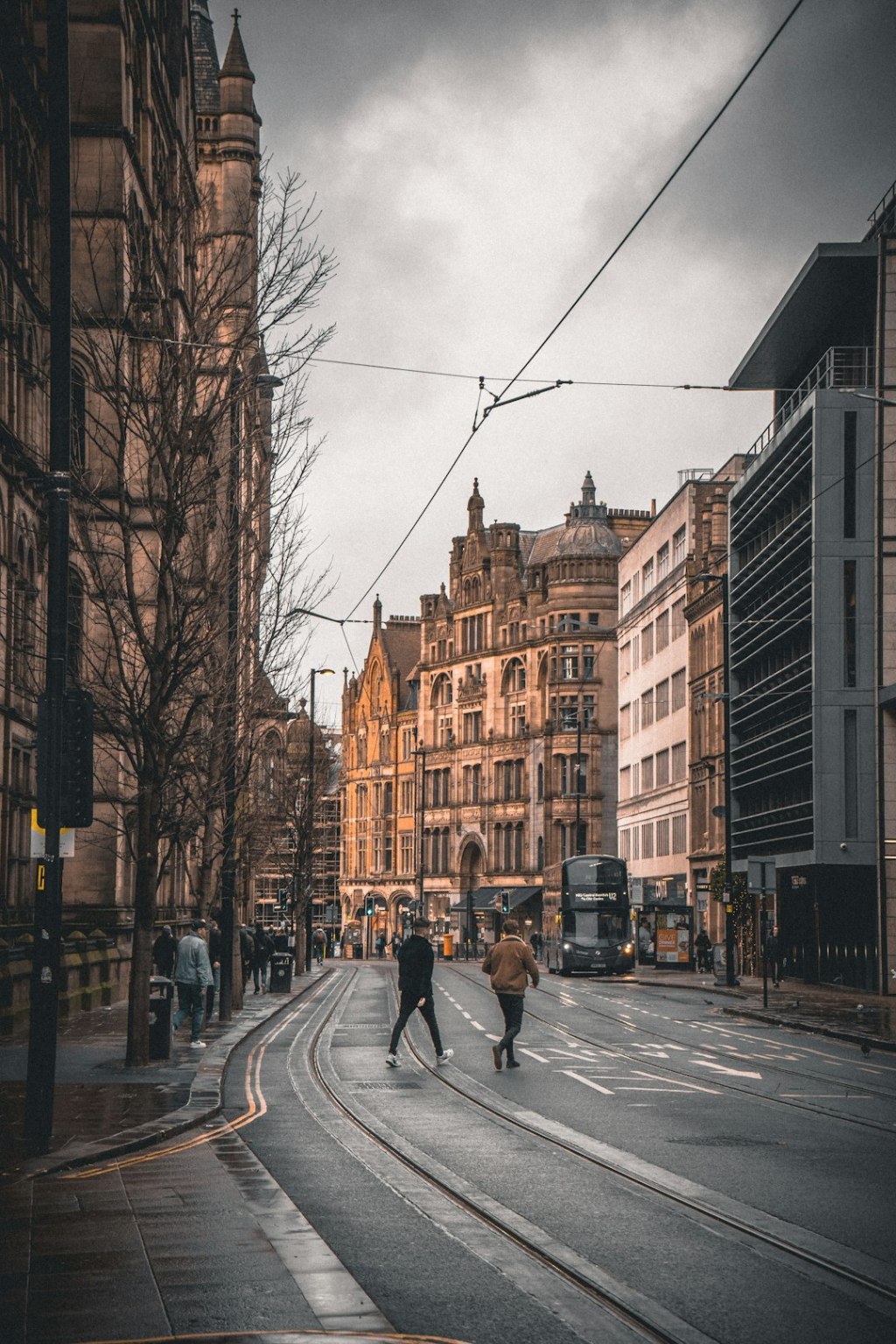
Because this is the place in our hearts, in our homes, because this is the place that’s a part of our bones. -Tony Walsh
The city of Manchester in the North-west of England has historically influenced political and social thinking throughout the United Kingdom, as well as being a cultural centre for music and media. In this week’s essay I want to talk about my beloved Manchester as a scene and its links with music, the media, and culture.
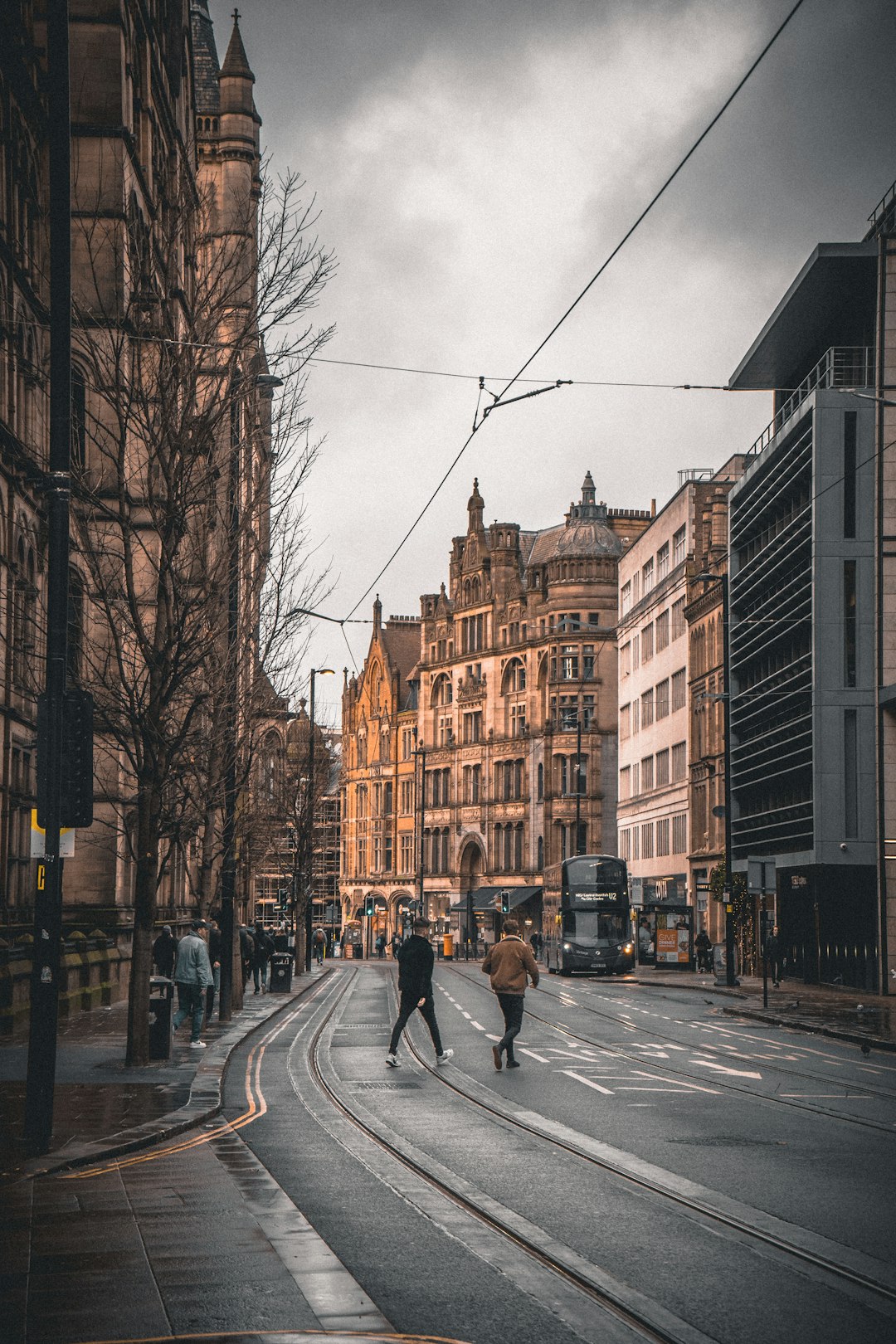
To understand Manchester as a scene we first need to look at scene theory. Bealle (2013) posits scene theory as a means to ‘describe the social, economic, and geographical aspects of urban popular music,’ noting that it was first used exclusively within American and British pop culture. A scene arises when there is a context of co-existing musical practices, in this case study within the city of Manchester, in which a sense of community derives from these links. The theory of a scene in a geographical sense is attributed to Straw (2004) who states that a scene ‘designates particular clusters of social and cultural activity.’ However, this contrasts the idea of a scene as a way to recognise a genre and a phenomenon that may be seen globally, for example the Heavy Metal scene. Within Manchester, the scene begins with an aesthetic which is then elaborated on by the literature, music and media that is produced, thus creating the Manchester scene.
Krims (2012) notes that place becomes a ‘geographical equivalent of identity.’ In urban scenes, such as Manchester, this can be characterised by a population shift, or when young people appropriate the space. For example, living in the north of England costs less than it did to live in the south in cities such as London, as a result younger people moved to these spaces with cheaper housing and venues and began to create a scene.
When we consider Manchester as a place it is totally multifaceted. There are many examples of musicians, artists, writers, and sports clubs that have contributed to the Manchester scene and throughout all media the links to place are seen clearly. The Bolton band The Buzzcocks were champions of the scene in its early stages, believing in promoting in Manchester and actively inviting other bands such as Punk band The Sex Pistols to perform there. Five visits in 1976 by the Sex Pistols gave ‘northern folk the building blocks and blueprint – but local architects took time to realise their plans.’ On June 4th 1976, The Sex Pistols played the Lesser Free Trade Hall which is considered to be ‘Year Zero’ for Manchester’s scene, Albiez (2012) suggests that whilst this performance may have had a direct consequence on those there, he argues that ‘no single performance makes a music scene.’ Much like Haslam (2000), Albiez states that it may have been a combination of the two performances at the Lesser Free Trade Hall that kickstarted the Manchester Scene. However, Albiez argues that it may not have just been local but also national factors that contributed to the scene’s growth, such as coverage from national music press such as the NME and Melody Maker. One of the crucial elements to the development of the Manchester scene was its set of aspiring journalists, noted Heylin (2007.) Two of the most influential journalists of the time being Paul Morley and Ian Wood. There were scenes appearing all over the country, but Manchester had journalists with the ability to interpret what was happening, an important example of this is Paul Morley’s writing about the band Joy Division. Morley was able to make sense of Joy Division and their bleak northern aesthetic and in doing so, he spread word of the band and what they were doing, which led to the development of a northern and more specifically Mancunian aesthetic.
The notion of Heterotopia, elaborated on by French philosopher Michael Foucault (1967) is used to describe a certain cultural, institutional, or discursive spaces that are somehow ‘other.’ This concept can be applied to the idea of the Northerner. Pordzik (2007) states that the Northern music scene ‘formed to challenge and punctuate the economic influence of the London-based music industry,’ while also making ideological statements of regional forms of the northern identity. The Salford band The Smiths exemplified the northern culture and bleak aesthetic throughout their music. This view of the north can be attributed to many things although ongoing recessions hit the north harder than anywhere else, leaving city centres disfigured and destitute. However, Stephen Patrick Morrissey, known professionally as Morrissey, was able to remap Manchester into fertile land for new art forms. In 1984, The Smiths released their first self-titled album, the first track on this song of particular significance is ‘Reel Around the Fountain,’ in this song Morrissey quotes the play, A Taste of Honey by Shelagh Delaney. Written in 1958 this play grapples with social issues that Delaney thought were not being addressed, the play is set in Salford and reflects the northern way of living at the time. Delaney also appears on the cover of The Smiths 1987 compilation ‘Louder Than Bombs’ as well as the single ‘Girlfriend in a Coma.’ Morrissey’s love of the play began though with the 1961 film adaptation which he deemed ‘virtually the only important thing in British film in the 1960s as far as I’m concerned’ (Goddard, 2012.) A later release by The Smiths, ‘This night has opened my eyes’ is a retelling of the play. The final track off their 1984 album, ‘Suffer Little Children,’ makes reference to the infamous child murders that took place in the 1960s on the Saddleworth Moors which overlook Manchester. Initially the song drew controversy due to it naming the victims and was later removed from multiple shops, although it was later re-released when it was established that it was intended to honour the victims.
A recurring notion within the art that Manchester produces is Psychogeography, this is the exploration of urban environments, which emphasises interpersonal connections to places. In 1955 the French Philosopher Guy Debord defined it as “the study of the precise laws and specific effects of the geographical environment, consciously organised or not, on the emotions and behaviour of individuals.” This can be observed throughout many scenes globally, we can also apply this theory to the Manchester scene, one example being Mark E. Smith and The Fall, although there are claims that they were never part of the scene their discography clearly has deep links to the urban environment of Manchester. In a 2008 article written in the Manchester Evening News, Smith stated “I JUST don’t think we’re a Manchester group. We just didn’t fit in” (Clegg, 2008.) However, as Hannon (2016) argues The Fall do in fact have their ties to the city and the scene and the bands success is very much indebted to Manchester. In ‘Dragnet,’ The Fall’s second studio album released in 1979 Mark E. Smith sings about what it is to be northern, taking notes from the derelict Belle Vue greyhound track. In ‘Before the Moon Falls’ Smith sings,
“Up here in the North there are no wage packet jobs for us/ Thank Christ/While young married couples discuss the poverties/ Of their self-built traps/ And the junior clergy demand more cash/ We spit in their plate and wait for the ice to melt.”
Another way in which we can clearly observe the notion of psychogeography in relation to the Manchester scene is through the works of many Mancunian poets. In 2012 Manchester poet Tony Walsh was commissioned by the charity Manchester Forever to author the poem ‘This Is the Place,’ which has since become synonymous with what it means to be from Manchester. In 2017 after the Manchester arena bombing the poem once again gained traction and gave the people of Manchester a sense of pride and words to use when there were none, “‘This is The Place’ has entered the fabric of the city in a way an artist can only dream of,” commented Tony Walsh.” (Forever Manchester 2020) The poem can now be found in artwork across the city as well as referenced in many other Mancunian media, for example Noel Gallagher released an EP of the same name. Dr John Cooper Clarke is regarded as the punk poet and has influenced other creatives, such as the Arctic Monkeys with his Poetry. His poetry, similarly, to Walsh’s, conveys a sense of place and is specific to the Manchester scene. Inspired by the desolation of 1970s Manchester and his English teacher, Clarke began to perform in folk clubs around the city performing his poetry which reflected the emerging scene of the time.
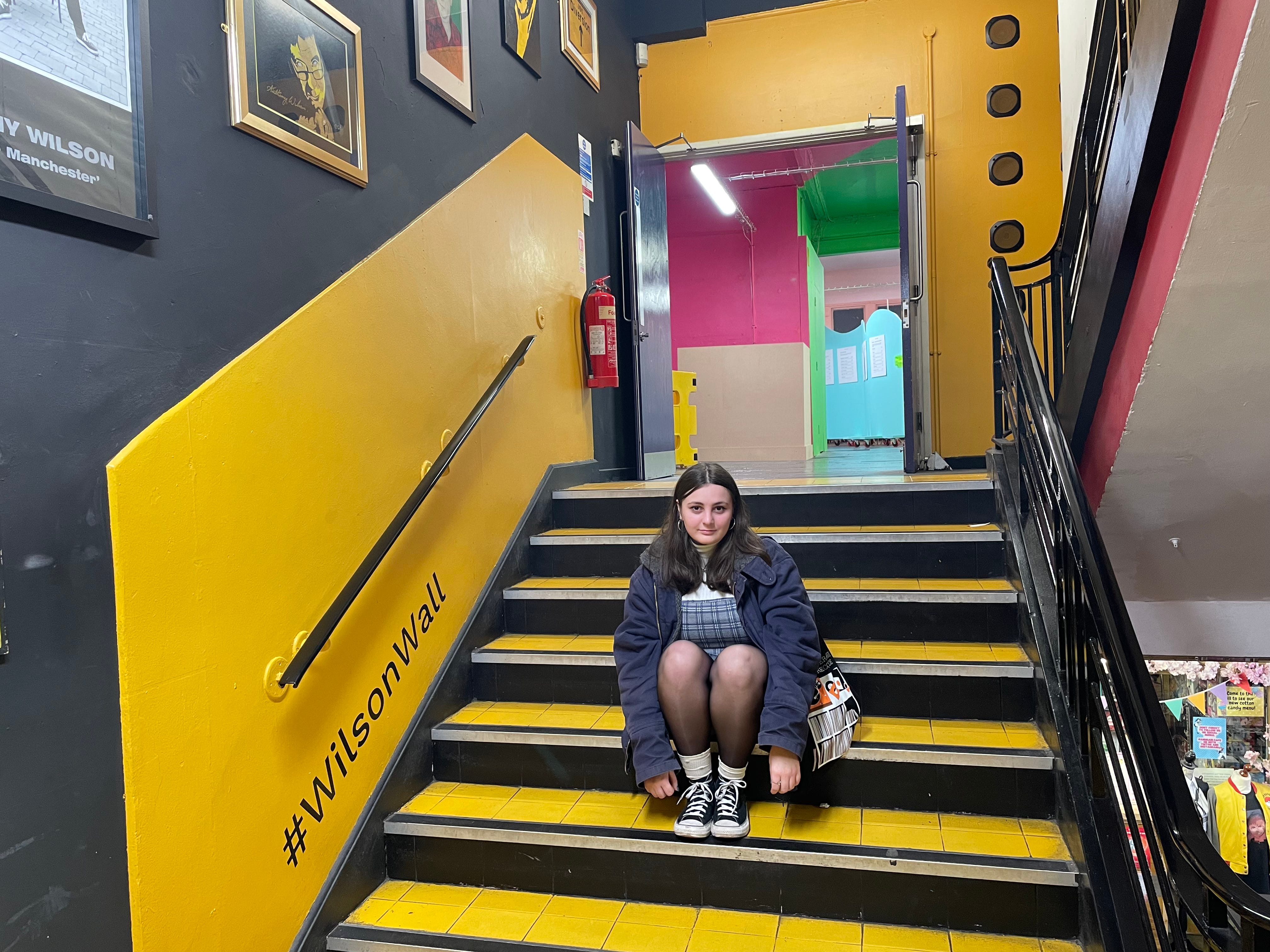
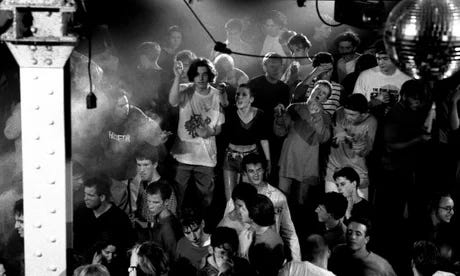
In the mid to late 1980s there was a shift musically in Manchester. The infamous Haçienda club opened in 1982 and with it came rave culture, owned by Factory Records owner and presenter Tony Wilson, the venue hosted a wide range of acts such as Madonna on her first performance in the United Kingdom as well as more local acts such as The Smiths playing the club multiple times. The club culture in Manchester grew due to the Haçienda hosting multiple dance music nights, however it was their pioneering Ibiza nights hosted by Mike Pickering and Jon DaSilva that boosted the popularity of house music, eventually culminating into a specific scene dubbed ‘Madchester.’ Unlike the disfigured image of Manchester that The Smiths painted, the Madchester aesthetic was drug-fuelled and bright although it is arguable as to whether this is productive to the Manchester image. Although the nightclub did experience an ecstasy-related death in 1989 the council still encouraged the scene as it was an “active use of the city centre core” in line with the government’s policy of regenerating urban areas.” (Glinert 2009.) The Haçienda was also one of the nightclubs that paved the way during the British social phenomenon, commonly referred to as the second summer of love. In 1988 the United Kingdom saw a rise in interest in acid house and rave culture after Mike Pickering, Graeme Park, Danny Rampling, Paul Oakenfold and Nicky Holloway went on holiday to Ibiza and witnessed the rave culture and then brought it back to the United Kingdom in which it became a distinctly British culture.
As well as being crucial in the development of rave culture in Manchester, the Haçienda was also instrumental in the careers of Manchester bands such as The Happy Mondays, Oasis, and The Stone Roses, this was due to the club also being a concert venue, despite making constant losses financially until the club began to host the visionary ‘Nude’ night which turned this around for Factory in 1987. Although, the Haçienda closed in 1997 its legacy still remains as part of the Manchester scene. The old location of the building has now been converted into apartments which adds to cultural appeal and once again allows for younger people to appropriate the space to create new scenes. Much like how in Japanese music scenes where art has played a large part, the same can be said for the classic yellow and black stripes that have become synonymous with the hacienda, as well as iconography with industrial themes. Moreover, the Haçienda classical is a reinvention of the club and keeps bringing in an audience almost 20 years after it closed its doors.
During the nineties, Manchester itself became its own genre of music, once again distinctly different from what was happening in the south. In 1991 the band Oasis formed and arguably became, and still is, one of Manchester’s biggest exports. The band encapsulated indie sleaze and what has come to be known as ‘Manchester swagger,’ with their Mancunian accents and aesthetic as a band. The band rose to fame during the era of Brit-Pop, “Britpop was a style of music that occupied a central space in the popular culture of mid- 1990s England. Britpop was also notable for its mix of nostalgia for the England of the 1960s and confidence in the England of the early Blair New Labour period.” (Sykes & Tranter, 2015) The widely reported ‘Battle of Britpop,’ pitted Oasis against Blur, an indie band from London, who apart from being around in the same period, had little in common musically. As I mentioned before, northern indie differentiated itself from the south, in that the key motifs in their music were dissimilar. While Oasis sang about drugs and Rock-and-Roll, Blur were playing more into stereotypes of Britishness, for example in their song Parklife. Popular music writer, Martin Cloonan (2007) identified 6 self-defining traits for British band during this period, many of which the Britpop bands played into. One example of this being a predominant ethos of laddishness, which is clearly displayed through Oasis’s actions and overall aesthetics (e.g., Bucket hats, beer, and cigarettes)
However, the ‘Battle of Britpop’ spurred on the success of these bands and even brought a sense of nationalism, a probable reason for this being the nostalgia that the public felt for the previous eras of global pop-dominance such as the sixties. Despite Oasis placing second in the charts, their influence continues to be more prevalent and woven into the fabric of Manchester, their song ‘Don’t look back in Anger,’ is widely associated with the 2017 Arena Bombing and played a key role in aiding Manchester in grieving and rebuilding itself after the attack.
In addition to Oasis, The Stone Roses also contributed greatly to the Manchester scene. The band formed in 1983 and also played the Haçienda like many other bands of the time and like Oasis, they displayed many of Cloonan’s six self-defining traits, which made them appeal to the youth of the time, although this appeal continues even today. One of the other biggest cultures in Manchester, is football, the city divided into who is a red and who is a blue. The Stone Roses are particularly important the Team Manchester United due to their track ‘This Is The One,’ being the teams walk on music. In 2016 Nye defined soft power as, “when one country gets other countries to want what it wants might be called co-optive or soft power in contrast with the hard or command power of ordering others to do what it wants”. Because of Manchester United’s success globally Manchester holds a vast amount of soft power as many people worldwide want to support the team, although the same can be observed with Liverpool Football Club. In this way we can observe different social groups interacting with each other within a scene as their shared culture brings them together.
In 1990, The Stone Roses performed one of their most notable outdoor concerts at Spike Island in Widnes. The concert inspired the 2012 film of the same name and later a resurrection concert for the events thirtieth anniversary. Headlined by the tribute act The Clone Roses,the event took place in 2021 and also featured tribute acts of other iconic Manchester bands. Due to the ongoing popularity of the Manchester scene many of the songs are preserved by tribute acts, such as Oasish, The Smiths Ltd. And True Order.
Manchester is a city rich in history and culture, with a scene so deeply embedded it has become part of the city itself. Therefore, it is difficult to only focus on music, media, or culture due to connections formed throughout. The Manchester scene cannot be copied so easily because of the culture being created around authentic experience which is distinctly different and parasocial interactions that have created new forms of art. A more modern example of this being ‘Tell Me Lies about Manchester,’ by the post-punk group Cabbage:
“I’ve had a pint with every person/Who’s ever played in The Fall/And I’ve had numerous trials for City/ ‘Cos I am mega on the ball.”
Throughout this playful and somewhat mocking song, Cabbage unintentionally demonstrates as to why another scene cannot replicate that of Manchester, because culture is so linked with place and regional identity it is impossible to copy it successfully without being Mancunian yourself.



Leave a Reply